On this page
An automotive BDC (Business Development Center) is a communications team within a car dealership responsible for managing leads, follow-ups, and appointment scheduling before customers reach the showroom or service bay. Unlike receptionists or salespeople, the BDC operates with structured processes, trained representatives, and performance metrics to consistently convert inquiries into booked appointments.
In simple terms, the BDC exists because salespeople are built to close - not to nurture. Most sales teams focus on customers physically in front of them. Meanwhile, internet leads, missed calls, and service opportunities require disciplined, persistent follow-up. The BDC fills this gap with process and consistency.
There are two primary types:
- Sales BDC: Drives showroom traffic and vehicle sales
- Service BDC: Fills service bays and improves retention
They work best as complementary systems. Many dealerships start with one and expand to both as lead volume grows.
Why Dealerships Need a BDC - The Business Case
If your dealership is generating leads but not converting them efficiently, the problem is rarely demand; it’s follow-up discipline.
Modern car buyers are already deep into research before they contact you. According to Automotive Training Network:
- 95% of vehicle buyers start online
- 76% use search engines before contacting a dealer
By the time a lead reaches your store, they are already comparing you with competitors.
Now consider the current performance reality:
- Average dealership lead-to-sale conversion: 5.72%
- Service department conversion: 12.61%
Some reps are excellent. Others are inconsistent. Most are busy closing today’s opportunities.
A BDC removes personality dependency and replaces it with a repeatable process.
What Does a BDC Actually Do?
Many dealership leaders underestimate the true scope of a modern automotive BDC. It is not just answering phones. It is the operational engine behind consistent appointment flow.
Core BDC Responsibilities
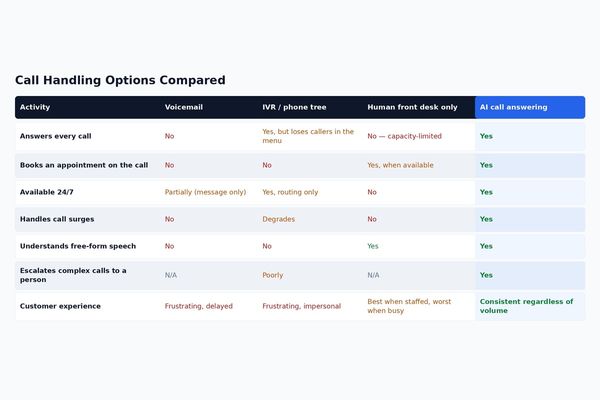
Inbound call handling
Every missed call is a potential lost sale. The BDC ensures no lead hits voicemail during business hours.
BDC teams manage leads from:
- Website forms
- Cars.com
- AutoTrader
- Third-party marketplaces
- Paid ads
- Chat tools
Speed and personalization are critical here.
Appointment setting (sales and service)
The primary goal of most BDC interactions is simple: secure the visit.
Lead qualification BDC reps gather key buying signals:
- Budget
- Timeline
- Vehicle interest
- Trade-in status
- Financing readiness
This makes the showroom handoff smoother and more productive.
Outbound follow-up
High-performing BDCs systematically re-engage:
- Unsold showroom traffic
- Unconverted internet leads
- Past customers
- Lease-end opportunities
Appointment confirmation sequences
Reducing no-shows is a major lever for revenue. BDC teams run structured reminder workflows.
Service-to-sales transitions
Service customers are often the lowest-cost sales opportunities. BDC teams identify:
- Lease maturities
- High-mileage vehicles
- Upgrade candidates
Customer retention outreach
This includes loyalty campaigns, repurchase reminders, and long-term follow-up.
CRM data discipline
Every interaction must be logged. Without this, personalization collapses.
The Customer’s Perspective
Today’s customers rarely contact just one dealership.
They are:
- Submitting multiple forms
- Calling multiple stores
- Comparing responses in real time
The dealership that responds first and most intelligently usually wins the appointment.
There is also a trust factor.
When customers must repeat themselves because the dealership has no record of prior conversations, friction increases, and many simply move on.
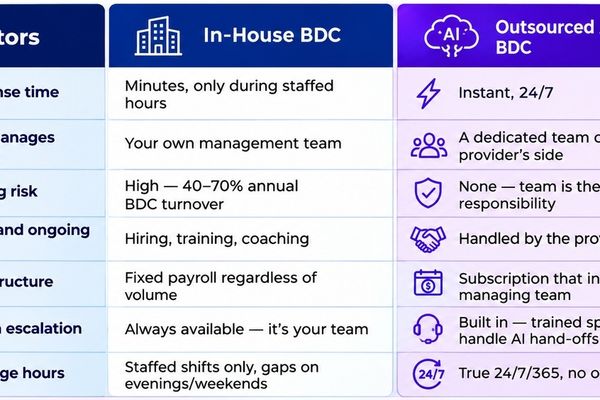
In-House BDC vs. Outsourced BDC
This decision deserves an honest, numbers-driven evaluation, not a sales pitch.
On paper, building an internal BDC can look attractive. In practice, the full cost is often underestimated.
Average BDC rep salary: $37,575/year
But salary is just the starting point. Additional expenses include many other factors like:
- Benefits
- Payroll taxes
- CRM licenses
- Phone systems
- Training time
- Management overhead
- Recruiting costs
- Ramp time
The true cost per seat is significantly higher than the base salary.
BDC manager salary range: $48,000–$85,000
The Hidden Multiplier: Turnover
Now factor in turnover.
According to the NADA Dealership Workforce Study:
- Dealership sales staff turnover can reach up to 71.9% annually.
- BDC roles often experience similar churn.
Every departure creates:
- Recruiting expense
- Retraining time
- Performance dips
- Customer continuity loss
Autopeople estimates that replacing one employee costs 50%–200% of the employee's annual salary when all factors are properly included.
Outsourced BDC: When It Makes Sense
For many dealerships, outsourcing solves the biggest operational headaches by:
- Reducing staffing volatility.
- Eliminating recruiting burden.
- Providing trained agents from day one.
- Lowering fixed overhead.Improving coverage consistency.
Key advantages:
- Eliminates hiring and turnover burden.
- Provides 24/7 coverage without staffing complexity.
- Comes with pre-built processes and scripts.
- Faster ramp-up.
- Predictable costs.
- According to Traver Connect, outsourcing can save dealerships $50,000+ annually when true staffing costs are considered.
The Trade-Off
Outsourcing does introduce one legitimate concern:
Less direct control over brand voice and culture. This is why vendor selection and onboarding matter significantly.
The Honest Verdict
Large dealer groups: Can sustain high-quality in-house BDCs with sufficient investment.
Single-point and smaller dealerships often achieve better, faster ROI with outsourcing.
Hybrid model: Increasingly popular In hybrid setups:
- In-house team handles high-touch relationships.
- Outsourced partner covers after-hours and overflow.
- Automotive BDC Best Practices.
This is where performance gaps are won or lost.
1. Respond to Every Lead Within 5 Minutes
- This is the modern industry standard.
- Under 5 minutes: highest engagement.
- After 30 minutes, lead quality drops sharply.
- After 24 hours, most opportunities are gone.
Overnight and weekend leads should be the priority when the team logs in — not worked randomly.
2. Use Call Guides, But Train Reps to Sound Human
Scripts create consistency. They prevent calls from drifting.
Every BDC should maintain guides for:
- Inbound internet leads.
- unsold showroom follow-up.
- service reminders.
- Cold outreach.
However, robotic delivery kills trust.
The goal: structured conversations that still feel natural.
Remember: the objective of the first contact is usually to secure the appointment. Every “call me back later” increases risk.
3. Make Every Interaction Personal
- Customers can spot generic outreach constantly.
- High-performing BDC reps always reference:
- Customer name.
- Specific vehicle of interest.
- Timeline needed.
- Budget signals.
This requires disciplined CRM usage.
Template blasts and copy-paste SMS messages are one of the fastest ways to lose a multi-shopping customer.
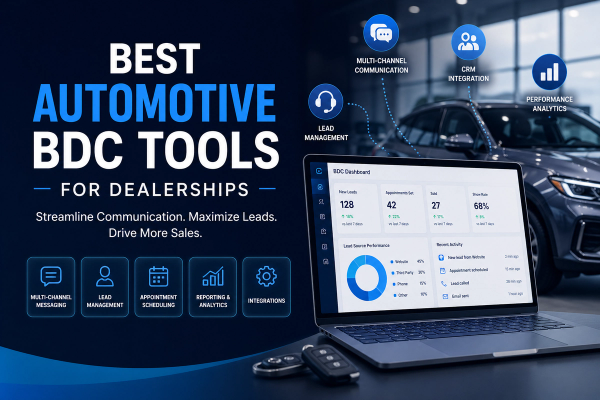
4. Master Multi-Channel Communication
- Customers expect flexibility.
- A modern BDC must actively manage:
- Phone
- SMS
- Chat
SMS is increasingly the highest-response channel, especially for reminders and same-day coordination.
5. Integrate Your CRM — And Enforce Its Use
This is non-negotiable.
Every interaction must be logged:
- Calls
- Emails
- Texts
- Notes
- Objections
- Next steps
CRM discipline enables personalization at scale and protects the dealership from turnover disruption.
Without it, the BDC is just answering phones.
6. Confirm Every Appointment — Twice
Unconfirmed appointments have dramatically lower show rates.
Best-practice cadence:
- Confirmation - 1: 24 hours prior (phone or SMS)
- Confirmation - 2: Morning of appointment (SMS)
Dealerships that enforce this process consistently see meaningful show-rate improvements.
7. Train Continuously — Not Just at Onboarding
Most new BDC reps need 60–90 days to reach full productivity.
- Ongoing training should include:
- Weekly call reviews
- Live objection role-play
- Script updates
- Cross-training with sales and service
- Inventory and promotion briefings
The best BDC managers also analyze which appointments actually convert to sales.
Then they reverse-engineer what successful pre-appointment conversations looked like.
8. Use AI and Automation for Speed — Not as a Replacement
AI is powerful — when used correctly.
AI handles:
- After-hours responses
- lead re-engagement
- appointment reminders
- sentiment analysis
- Lead scoring
- Humans handle:
- Nuanced objections
- Emotional conversations
- Relationship building
The rule:
AI handles volume and speed. Humans handle trust and complexity.
9. Track Benchmarks — Not Just Metrics
Numbers without context don’t drive improvement.
Healthy BDC benchmarks:
- Lead response time: < 5 minutes
- Appointment set rate: 20–30% (top teams 30%+)
- Appointment show rate: 60–70% with confirmations
- Lead-to-sale conversion: improve beyond 5.72% industry average
Spyne.ai reports that dealerships actively optimizing BDC performance can see:
Up to 30% more appointments booked
Up to 25% higher close rates
10. Align the BDC With Sales and Service
The BDC should never operate in isolation.
It needs real-time access to:
- Inventory
- Pricing
- Promotions
- Service availability
- Most importantly, the showroom handoff must be warm and informative.
- When a customer arrives, the salesperson should already know:
- Why are they coming?
- What do they want?
- Their timeline.
- Their concerns.
If the handoff is cold, the BDC’s work is partially wasted.
CRM handoff notes should be mandatory.
Common BDC Mistakes to Avoid
- If any of these feel familiar, there is immediate upside to capture.
- Treating the BDC like a phone-answering desk instead of a revenue engine.
- Sending leads to voicemail.
- Ignoring unsold showroom follow-up.
- Allowing CRM data to become inconsistent.
- Hiring reps but underinvesting in training.
- Focusing only on appointments set, not the show rate.
- Over-automating and removing the human touch.
- Most underperforming BDCs fail because of process gaps, not market conditions.
Is a BDC Right for Your Dealership?
You likely need a BDC if:
- Leads wait more than 5–10 minutes for a response.
- Unsold showroom follow-up is inconsistent.
- Appointment show rates are below 50%.
- Customer satisfaction scores are slipping.
- Salespeople manage internet leads with no structured process.
- The reality is simple.
The automotive buying journey now begins online for the vast majority of customers. Shoppers contact multiple dealerships simultaneously and make fast judgments based on response speed and relevance.
The dealership that responds first — with the most informed and personal message — usually wins the appointment.
And most of the time, the sale follows.

Manan Bhalodia
Expert in automotive AI solutions and customer service optimization. Passionate about helping automotive dealerships leverage technology for growth.