On this page
Dealerships pour thousands of dollars a month into Cars.com, CarGurus, Facebook, and Google to generate leads. Then, more often than not, those leads get one phone call, maybe a form-email auto-reply, and nothing else. The ad spend did its job. The follow-up process didn't.
This isn't a training problem or a motivation problem. It's a structural one. Dealership follow-up breaks down because the volume of leads, the number of channels customers expect to be reached on, and the persistence required to convert a modern car buyer all exceed what a busy sales floor can realistically sustain by hand. A BDC rep juggling walk-ins, phone-ups, and a growing internet lead queue simply cannot give every lead the multi-touch, multi-channel attention it needs — not because they aren't trying, but because the volume of the job has outgrown what one person can reliably do by hand.
The data on this is consistent and, frankly, uncomfortable for most dealer groups. Study after study, across different research firms and different years, keeps landing on the same conclusion: dealerships are generating plenty of leads and losing most of them to slow, thin, or simply nonexistent follow-up. This article walks through what that data shows, why it matters for marketing ROI specifically, and what effective follow-up actually looks like for dealerships competing in 2026.
The Follow-Up Gap Is Bigger Than Most Dealers Think
How Many Leads Actually Get Worked
Every dealer likes to believe their team is on top of leads. The numbers tell a different story. A 2025 Lead Response Study from DAS Technology, presented at the NADA Show and covering roughly 1,700 dealerships across the back half of 2024, found that 61% of dealers responded to a lead within 15 minutes — genuine progress from prior years. But that statistic hides the more important finding: speed improved while quality collapsed. The same study found that 74% of dealer responses skipped a price quote entirely, and 91% left out payment details altogether. Getting back to a customer quickly means very little if the message doesn't actually answer what they asked (Car Dealership Guy News).
The CRM Isn't the Problem — Follow-Through Is
It's tempting to blame the software. In practice, the CRM is rarely the bottleneck — the human process wrapped around it is. Research from Flai's 2026 dealership customer experience report found that 43.2% of dealership sales leads are mishandled in some way: missed calls, follow-up that lapses after a day or two, or responses that never happen at all. More strikingly, 14.1% of leads are never logged into the CRM in the first place, which means they're invisible to any follow-up process before they even have a chance to fail (Flai, Dealership Customer Experience Statistics). You can't fix what you can't see, and a shocking share of dealership leads are lost before anyone even attempts to work them.
The same report points to a second, less obvious leak: leads that come back to the dealership website after their initial inquiry — a strong buying signal — often wait far too long for a response. A meaningful share of these returning visitors go more than a week without being contacted again, even though a large share of buyers make their decision within the first few days. By the time the dealership circles back, the customer has usually already bought a car, just not from them.
Tired of losing leads to slow follow-up?
Super Producer follows up instantly, day or night.
What the Data Says About Response Time and Sales
The First-Responder Advantage
Car buying is one of the few major purchases where being first to respond carries a disproportionate advantage. Research compiled by BDC consulting firm Strolid, which has worked with dealerships across the U.S. market for over a decade, found that half of automotive leads go to whichever dealer responds first — even when a competing dealership has better pricing or inventory. Buyer psychology plays a role here: car shopping is high-consideration and emotionally charged, and the dealer who shows up first while that emotional momentum is still active has a real edge (Strolid, Lead Response Time).
That psychology also explains why the advantage fades so quickly. A shopper who submits a lead is usually still mid-research, comparing two or three dealerships at once, sometimes with a browser tab open to a competitor's inventory while they wait for a callback. Every additional minute of silence is time spent building rapport with someone else. By the time a dealership calls back an hour later, the shopper may already be scheduling a test drive down the street — not because that dealership had a better deal, but because they answered first.
The Cost of Delay
Outside the automotive industry specifically, Harvard Business Review's landmark study of more than 2,200 companies found that businesses attempting to contact a new lead within an hour of receiving it were nearly seven times more likely to qualify that lead than those who waited longer. Automotive dealerships, unfortunately, tend to fall on the wrong side of that curve — industry benchmarks compiled by Demand Local put the average dealership response time at somewhere north of 40 hours, nowhere close to the window that actually converts (Demand Local, CRM Lead Response Time Impact Statistics).
Why Speed Alone Isn't Enough
Even dealerships that respond quickly aren't necessarily following up well. The 2026 Pied Piper Dealer Group Study, summarized by WardsAuto, introduced a useful term for this: “digital handoff risk.” It describes the gap that opens up when an automated system fires an acknowledgment, a human is supposed to take over from there, and the handoff quietly fails. The dashboard shows the lead was “responded to.” The customer never actually heard from a person. This is precisely the failure mode that separates dealerships with good-looking metrics from dealerships that actually convert leads into appointments (Flai/WardsAuto summary of the Pied Piper study).
Old Leads Are Still Live Revenue — If You Follow Up
Most “Dead” Leads Aren't Actually Dead
Sales teams mark a lead dead after one unanswered call far more often than they should. The buying window data doesn't support that instinct. Roughly 60% of buyers who eventually purchase do so within the first three days of their initial inquiry, according to Flai's research — which means a large share of the customers a dealership writes off on day one are, in fact, still actively deciding where to buy (Flai, Dealership Customer Experience Statistics). The lead isn't gone. It's just being worked by someone else.
The Persistence Gap
A 2026 mystery-shop study from Clearline, which submitted real inbound leads to 53 dealerships and tracked every response over five full days, put hard numbers on how rare real persistence is. The average dealership took over nine hours to respond at all, and close to a third never responded. The dealerships that performed well didn't have bigger budgets or bigger teams — they had structure: defined response windows, a minimum number of follow-up touches, and management oversight that made sure the cadence didn't quietly die when one rep got busy. That disciplined group, by Clearline's count, made up only about 13% of the dealerships studied (Clearline, 2026 Mystery Shop Study).
The same study also found a large gap between how dealerships treat web-form leads versus phone voicemails. Web forms trigger automated workflows almost by default — the CRM logs the record and routes it, so someone eventually sees it. A voicemail depends entirely on a person checking the inbox, recognizing it as a live opportunity, and manually starting the follow-up process. That manual step is exactly where busy dealerships drop the ball, and it means phone leads — which often carry higher purchase intent than a casual form fill — get worse treatment than lower-intent web submissions.
What Happens When You Reactivate Aged Leads
This is where the opportunity sits for most dealerships, and it's the exact gap Super Producer is built to close. A lead that came in 30, 60, or 90 days ago and never bought a car somewhere else is not automatically a lost sale — it's often a customer who never heard back with enough persistence or personalization to act. Life gets in the way, budgets shift, and shoppers pause their search; that doesn't mean they've stopped looking, it often just means the timing wasn't right on the first attempt.
Dealerships running structured, automated follow-up against their aged lead lists routinely find appointments and sold units sitting in databases they had already written off. The inventory and the intent were both still there. Nobody had followed up. Treating the CRM's lead history as a live prospect list — rather than an archive — is one of the highest-return, lowest-cost changes a dealership can make, because the acquisition cost for those leads has already been paid. There's no additional ad spend required to go back and work them properly.
Still sitting on leads from 30, 60, or 90 days ago?
Super Producer re-engages them automatically. No extra ad spend.
Why Manual Follow-Up Breaks Down at Scale
The Math Doesn't Work for a Human BDC
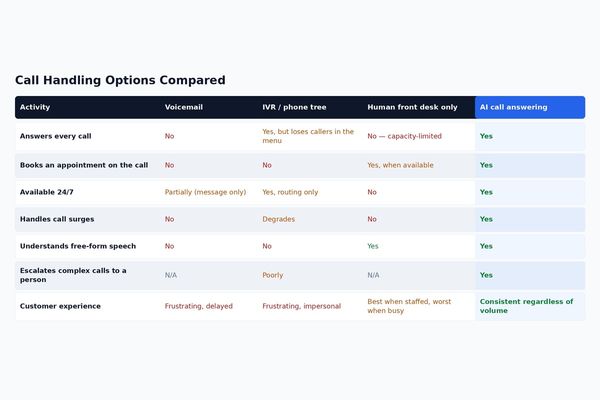
Consider what real follow-up requires: a text or email within minutes of a lead coming in, a phone call within the hour, and then a structured cadence of touches across call, text, and email for the following several days — all personalized to the specific vehicle the customer inquired about. Now multiply that by every lead a mid-sized dealership generates in a month, on top of walk-ins, phone-ups, and service customers a BDC rep is also expected to handle. It doesn't scale. Making it worse, a substantial share of leads — over half, by some industry counts — arrive outside normal business hours, when there's often no one available to respond at all (Demand Local, Lead-to-Sale Conversion Statistics).
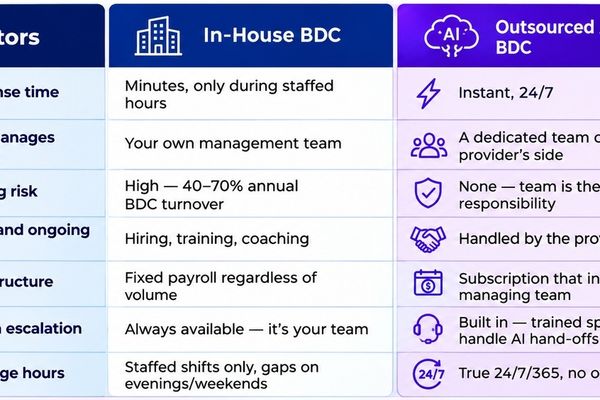
It doesn't scale. This is precisely the ceiling that pushes growing dealer groups toward a structured approach — see how to scale your dealership with an automotive BDC for what that looks like in practice.
Disconnected follow-up isn't a standalone problem, either — it's one of the most common — and costly — mistakes in dealership advertising, since every dollar spent generating a lead is wasted the moment that lead sits unanswered.
Even a well-staffed BDC hits a ceiling. There are only so many outbound calls, texts, and emails one person can send in a shift, and that capacity has to be split across brand-new leads, day-two and day-three follow-ups, and the aged-lead list sitting in the CRM. In practice, something always gets deprioritized — usually the aged leads, since they feel less urgent than the phone ringing right now. Over time, that “less urgent” pile grows into a database of hundreds or thousands of past inquiries that never got a fair shot.
Turnover and Inconsistency
BDC and sales staff turnover are known challenges across the industry, and every rep who leaves takes their own follow-up cadence with them. Even among reps who stay, discipline varies rep to rep and week to week. A follow-up process that depends entirely on individual memory and motivation is not a process — it's a hope. That inconsistency is exactly why the best-performing dealerships in the studies above rely on defined, enforced systems rather than individual effort.
The same is true of inventory: when the process runs on individual memory instead of a system, mistakes compound the same way. See manual vs. automated inventory management in car dealerships for a closer look at that pattern.
What Effective Dealership Follow-Up Looks Like in 2026
Multi-Channel, Not Single-Channel
A single voicemail and a generic email are not a follow-up strategy. Customers today expect to be reached the way they actually communicate — text first, for many buyers, with call and email layered in. Strolid's research supports a hybrid approach: automated systems handle the instant acknowledgment, and a human follows up shortly after with a personal call. That combination consistently outperforms either channel alone (Strolid, Lead Response Time).
Relying on a single channel also means a dealership is betting that that channel is the customer's preference. Some shoppers screen unknown calls and only respond to text. Others ignore texts from numbers they don't recognize but will open an email. A follow-up process built around one channel guarantees that some share of otherwise reachable leads never gets reached at all, simply because the outreach never showed up where that customer was actually paying attention.
Speed Within the First Hour, Persistence Over the First Week
The pattern that shows up across nearly every study cited here is the same: respond within 15 minutes on a fast channel like text or email, follow with a phone call within the hour, and then sustain touches — not just one or two — across the following five or more days. Fifteen minutes has become the line, in study after study, between a dealership customers perceive as serious and one they quietly move past (Flai/WardsAuto, Speed to Lead Automotive Guide).
Personalized, Vehicle-Specific Outreach
Generic “just checking in” messages get ignored, and customers can tell the difference between a template and a real follow-up. Messages that reference the specific vehicle a customer looked at, mention the dealership by name, and acknowledge what was discussed on a previous call convert at meaningfully higher rates than blanket check-ins. Specificity signals that someone is actually paying attention to that customer's situation, not running them through a mail-merge.
Where AI Fits
This is the gap AI-powered follow-up is built to close — not replacing the CRM, and not replacing the sales team, but doing the high-volume, always-on work that neither is realistically built to sustain. Platforms like Super Producer handle instant multi-channel outreach the moment a lead comes in, maintain a structured cadence across call, text, and email through the full buying window, and go back through aged and previously “dead” leads to find the customers who are still in-market but never got a real follow-up attempt. The goal isn't more leads. It's making sure the leads a dealership already paid for actually get worked.
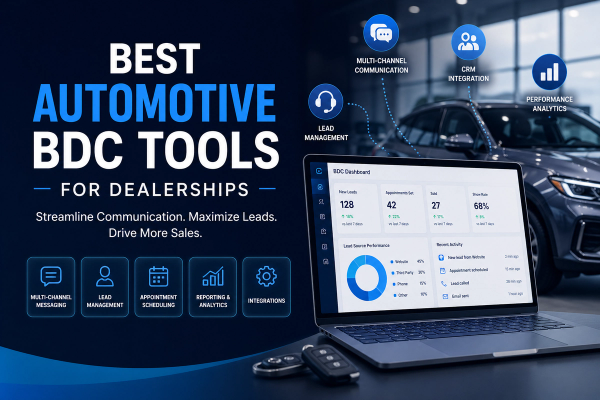
For a broader look at what's available beyond any single platform, see the best tools for automotive BDC.
Conclusion
Follow-up isn't a soft skill or a nice-to-have — it's the mechanism that turns ad spend into sold units, and it's one piece of a complete dealership marketing strategy that drives leads and sales together. Every lead that goes unanswered, gets one half-hearted call, or sits unworked for a week is a lead a dealership already paid Google, Cars.com, or Facebook to generate. When that lead buys from a competitor instead, the dealership isn't just losing one sale — it's paying twice for the same customer: once in ad spend, and again in lost gross when a better-organized competitor closes the deal instead.
The dealerships winning in 2026 aren't necessarily the ones spending the most on lead generation. They're the ones making sure every lead they already have gets a fast, persistent, and personalized follow-up process behind it. That's the difference between a marketing budget that generates leads and a marketing budget that generates sales.
Curious what structured, automated follow-up could recover from your own aged lead list? See how Super Producer works.

Manan Bhalodia
Expert in automotive AI solutions and customer service optimization. Passionate about helping automotive dealerships leverage technology for growth.