On this page
Key Takeaways
- AI isn't a "future" trend in car buying anymore — it's already reshaping how shoppers research vehicles, how dealerships generate leads, and how fast those leads get followed up on.
- A huge share of what used to be treated as a lost cause — the cold lead — is really just a warm lead that didn't get contacted fast enough, and AI is changing what "fast enough" means.
- Response speed has become the single biggest factor separating dealerships that convert car dealer leads from dealerships that just generate them.
- Predictive personalization, AI-powered financing tools, and virtual BDC agents are compressing a car-buying journey that used to take weeks into a much shorter, more self-directed process.
- Dealerships getting the most out of car dealer lead management software are the ones pairing AI-powered speed with a human team — not choosing one over the other.
Car buying has always been one of the most research-heavy purchases the average American makes. For decades, that meant multiple dealership visits, cross-shopping window stickers, and waiting around for a salesperson to "go talk to the manager." That process is quietly being rebuilt — not by one flashy new tool, but by AI working in the background of nearly every step: search, first contact, follow-up, and financing.
For car shoppers, this shows up as convenience. For dealerships and the BDC (Business Development Center) teams generating and working car dealer leads, it shows up as a completely different competitive landscape — one where response speed and personalization aren't nice-to-haves anymore. They're the baseline.
Here are five specific ways AI is reshaping that journey — for buyers and for the dealerships trying to keep up with them.
Why AI's Role in Car Buying Matters Right Now
Cox Automotive's ongoing Car Buyer Journey research has tracked a steady rise in the number of touchpoints — and the amount of online research — involved in a single vehicle purchase. Buyers today spend a significant chunk of their shopping time online before ever stepping onto a lot, comparing pricing, inventory, and reviews across multiple sources at once, often across several devices and sessions before ever contacting a dealership directly.
At the same time, Deloitte's Global Automotive Consumer Study has found a large and growing share of consumers say they're open to using AI-powered tools somewhere in their car-buying process, whether that's for research, financing questions, or scheduling a test drive. And J.D. Power's dealer-facing research has repeatedly flagged response speed and personalization as two of the biggest drivers of whether an online lead actually converts into a sale.
Put those together, and you get a simple picture: buyers are doing more self-directed research using AI-powered tools, and they expect the dealership side of the conversation to move at the same pace. That shift isn't isolated to any one part of the funnel — it's showing up in how people search, how they get contacted, what gets recommended to them, how quickly they move through the sales process, and how much friction is left in financing by the time they're ready to sign.
AI-Powered Search Is Replacing the First Dealership Visit
The "first dealership visit" used to be a physical one. Now it's a search query.
Google has reported for years that most car buyers say digital videos and search played a critical role in deciding which brand and dealership to consider, and that behavior has deepened with the rise of AI Overviews and conversational search. Instead of typing "Toyota RAV4 vs Honda CR-V" and clicking through five separate review sites, more shoppers now get a synthesized comparison directly in the search results — or ask a chatbot and get an instant, sourced answer, often without visiting a dealership website at all until much later in the process.
This changes what "ranking well" means for dealerships. It's no longer just about showing up in the ten blue links — it's about being the source AI systems pull from and cite when a buyer asks a research or comparison question. That's the whole premise behind AEO (Answer Engine Optimization) and GEO (Generative Engine Optimization): structuring content so AI systems can lift accurate, well-sourced answers straight from your pages, with your dealership named as the source rather than a generic third-party aggregator.
What this means in practice: dealership content now needs to directly answer the exact questions buyers are asking AI tools — "what's the best time to buy a car in [city]," "how much is my trade-in worth," "is 0% APR still available" — in clear, extractable language, not just optimized for old-school keyword density.
AI Is Turning More Cold Leads Into Sales Than Ever Before
This is where the shift is most obvious to anyone working inside a dealership's BDC — and it's the piece of the car-buying journey that costs dealerships the most money when it's handled poorly.
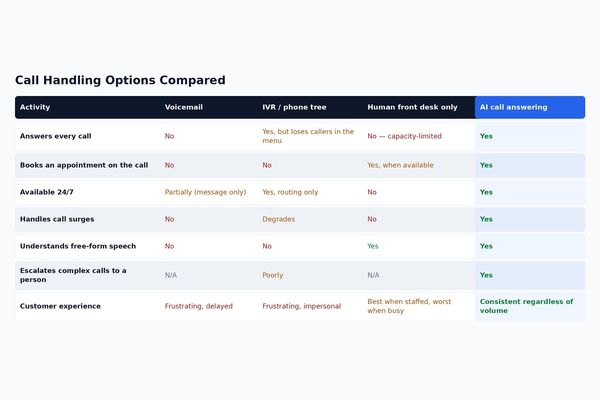
A cold lead is a shopper who showed real interest at some point — requested a quote, asked about financing, submitted a trade-in estimate — and then went quiet. A warm lead is one still actively engaging. The difference between the two usually isn't buyer intent disappearing; it's follow-up speed. Automotive lead response research has repeatedly shown that leads contacted within the first five minutes convert dramatically better than leads contacted even 30 minutes later, and conversion rates keep dropping the longer a dealership waits after that. A meaningful share of dealership website leads still come in nights, weekends, and holidays, when most BDC teams simply aren't staffed to respond.
That gap is exactly where AI has moved in. AI-powered lead generation and follow-up tools can respond to a new inquiry within seconds at any hour, and run automated, intent-based re-engagement sequences on leads that have already gone cold — instead of the generic "just checking in" email most dealerships default to. Rather than treating every unresponsive lead the same way, AI-powered lead scoring can also flag which cold leads are still showing underlying signals of interest (repeat site visits, opened emails, inventory page views) and are worth a direct human follow-up call, versus which ones genuinely have gone quiet.
The result: a growing share of what used to be written off as dead leads are getting revived and converted, simply because the follow-up is faster, more consistent, and more relevant than it used to be.
What this means in practice: the dealerships pulling ahead aren't necessarily generating more car dealer leads — they're the ones with lead management that makes sure fewer leads go cold in the first place, and a real system for reviving the ones that do.
See how fast your leads could be getting worked.
Superproducer responds to every car dealer lead within seconds — day or night — and automatically re-engages the ones that go quiet. Book a demo and see it running on your own lead flow.
Predictive Analytics Are Personalizing Vehicle Recommendations
A decade ago, "personalization" in car shopping meant a salesperson remembering you liked the blue one. Today it means AI systems analyzing browsing behavior, past inquiries, budget signals, and regional trends to surface vehicle recommendations, trim levels, and financing options actually relevant to a specific shopper — before they've talked to anyone.
Cox Automotive and other industry researchers have documented rising consumer comfort with this kind of AI-assisted recommendation, particularly among younger buyers already used to Netflix- or Amazon-style personalization in every other part of their lives. Pew Research's ongoing work on teen and young-adult technology habits has found that a large share of that age group is online almost constantly, which is shaping expectations for how fast and how personalized any digital experience — car shopping included — needs to feel.
On the dealership side, this shows up as AI-powered tools flagging, for example, that a shopper repeatedly viewing certified pre-owned SUVs under $30K is a strong fit for a specific unit on the lot — and prompting outreach accordingly, instead of a generic drip email. It also shows up in smaller, easy-to-miss ways: AI-generated email subject lines tailored to a buyer's specific vehicle interest, website content that adjusts based on what a visitor has already viewed, or SMS follow-up that references the exact trim and color a shopper asked about days earlier.
What this means in practice: generic follow-up campaigns are losing ground to AI-driven, behavior-based outreach that references the actual vehicles, price range, or features a specific shopper has shown interest in.
Virtual BDC Agents Are Compressing the Sales Cycle
The traditional car-buying timeline — weeks of research, multiple visits, a lot of back-and-forth over financing — is getting shorter, and AI is a big part of why.
Virtual BDC agents can now handle the repetitive, early-funnel work that used to eat up hours of a human rep's day: confirming inventory availability, answering FAQs about trims and packages, pre-qualifying a buyer's budget, and scheduling appointments — all before a human joins the conversation. By the time a real person on the sales team picks up the thread, the buyer is already warmed up, informed, and closer to a decision.
J.D. Power's dealership research has consistently linked faster, more consistent follow-up with higher close rates. Dealerships using AI to handle that early-stage triage are able to redirect their human BDC reps toward the conversations that actually need a person — negotiating, building rapport, closing — instead of spending the bulk of the day on repetitive inbound questions that an AI agent could answer just as well, instantly, at any hour.
This compression effect tends to benefit both sides. Buyers get answers faster and don't have to wait on hold or for a callback to confirm something as simple as inventory availability. Dealerships see fewer leads stall out during the early research phase, because the friction that used to slow buyers down — waiting for a human to respond to a basic question — has largely been removed.
What this means in practice: the sales cycle isn't shrinking because AI is replacing salespeople. It's shrinking because AI clears out the repetitive front-end work so human reps spend their time where it counts.
Curious what a virtual BDC agent would take off your team's plate?
From confirming inventory to pre-qualifying budget, AI can handle the repetitive early-funnel work so your reps focus on closing. Get in touch and we'll map it to your current process.
AI-Driven Financing and Trade-In Tools Are Removing Friction
Financing and trade-in valuation have historically been two of the most anxiety-inducing parts of buying a car — largely because they were opaque. Buyers didn't know what their trade-in was really worth, or what rate they'd qualify for, until they were already sitting across from a finance manager.
AI-powered valuation tools are changing that by giving buyers a real-time, data-backed trade-in estimate based on current market conditions and vehicle condition, before they ever set foot on the lot. AI-assisted pre-qualification tools can give a shopper a realistic sense of their financing rate and monthly payment range without a hard credit pull, using the kind of soft-check technology that's become increasingly common across auto lending.
Deloitte's automotive consumer research has flagged financing transparency as a major factor in buyer trust and satisfaction, and dealerships offering these AI-powered tools upfront are seeing shoppers arrive further along in the process — pre-qualified, aware of their trade-in value, and ready to talk specifics instead of starting from zero. For a purchase this size, that upfront transparency does more than speed things up; it changes how much a buyer trusts the dealership before a single in-person conversation happens.
What this means in practice: the dealerships winning this part of the journey are the ones putting financing and trade-in tools directly on their website and in their AI-powered chat flow, not gatekeeping that information until the buyer is already in the finance office.
What This Means for Car Dealer Lead Generation and Management
Put these five shifts together and a clear pattern emerges: the car-buying journey hasn't gotten shorter because buyers care less. It's gotten shorter because AI is removing friction at every stage — research, first contact, personalization, financing — and buyers reward the dealerships that show up fastest with the most relevant, most transparent information.
For BDC teams specifically, this changes the job. It's less about manually working every lead from scratch and more about managing a system where AI handles speed, volume, and cold-lead revival, and humans handle judgment, negotiation, and relationship-building. Dealerships evaluating lead generation for car dealers or shopping for the best lead generation service on the market should be asking less about how many leads a platform generates, and more about how few of those leads ever go cold in the first place — and how quickly the ones that do go cold get a real shot at being revived.
How Dealerships Can Adapt
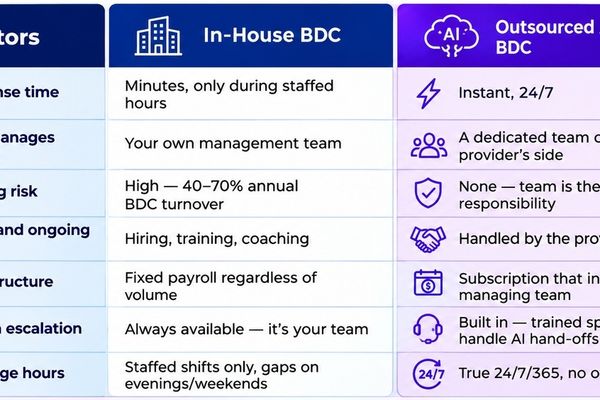
The dealerships pulling ahead right now generally aren't the ones that went "all AI" or stayed "all human." They're the ones combining both: AI-powered BDC software covering instant response, after-hours coverage, and cold-lead re-engagement, backed by a real human team for the conversations that need a human touch. That combination — an outsourced, AI-powered BDC layered with trained human agents — is increasingly how dealerships are closing the gap between how fast buyers now expect a response and what a traditional, business-hours-only team can realistically deliver.
Practically, that tends to look like: AI handling the first response and initial qualification on every single lead, regardless of when it comes in; automated but relevant follow-up on anything that starts to go cold; and a clean handoff to a human rep the moment a lead is ready to talk price, trade-in, or financing specifics. Dealerships that build their process this way aren't just working leads faster — they're working more of the leads they already paid for, instead of letting a growing share of them quietly disappear into the CRM.
Conclusion
The car-buying journey isn't being reshaped by one big, obvious AI product — it's being reshaped quietly, at almost every step: how buyers search, how fast a dealership responds, how personalized that follow-up feels, how transparent financing is from the start, and how many leads never get the chance to go cold in the first place. Dealerships that treat AI as a way to extend what their human team can do — rather than a replacement for it — are the ones seeing the shortest sales cycles and the strongest lead-to-close numbers in this new version of the car-buying journey.
AI-powered speed. A real human team behind it.
Superproducer combines instant response, cold-lead re-engagement, and after-hours coverage with trained human agents for the conversations that need a person. See how it fits your dealership.
FAQs
Is AI actually changing how people buy cars, or is this overstated? It's measurable, not hype. Research from Cox Automotive, Deloitte, and J.D. Power has tracked rising AI usage in vehicle research, growing buyer comfort with AI-assisted tools, and a direct, well-documented link between response speed and conversion rates — exactly the gap AI-powered BDC tools are built to close.
What's the difference between a cold lead and a warm lead in car sales? A cold lead showed interest at some point — a quote request, a trade-in estimate — but has since gone quiet. A warm lead is actively engaging. The difference is usually follow-up speed, not lost buyer intent, which is why AI-powered re-engagement can turn cold leads back into sales.
What's the biggest impact AI has had on car dealer lead management? Coverage and consistency. AI-powered chat and virtual BDC agents can respond to car dealer leads within the critical first few minutes — including nights and weekends — and automatically re-engage leads that have gone cold, instead of letting them sit untouched.
Do AI tools replace a dealership's human sales team? No — the strongest results come from pairing them. AI handles instant response, repetitive questions, and cold-lead follow-up; human reps focus on negotiation, relationship-building, and closing.
How does AI affect car buyers' trust in the financing process? By making it more transparent. AI-powered pre-qualification and trade-in valuation tools give buyers real numbers earlier in the process, which research has tied to higher satisfaction and trust in the dealership.
Sources
- Cox Automotive, Car Buyer Journey Study — https://www.coxautoinc.com/market-insights/
- Deloitte, Global Automotive Consumer Study — https://www.deloitte.com/global/en/Industries/automotive/research/global-automotive-consumer-study.html
- J.D. Power, Automotive dealer and consumer research — https://www.jdpower.com/business/automotive
- Think with Google, Auto shopper insights — https://www.thinkwithgoogle.com/marketing-strategies/search/
- Pew Research Center, Teens, technology and social media — https://www.pewresearch.org/internet/

Manan Bhalodia
Expert in automotive AI solutions and customer service optimization. Passionate about helping automotive dealerships leverage technology for growth.